
Machines With Ghosts
The market for old-blueprint vehicles is real. So is everything trying to kill it.

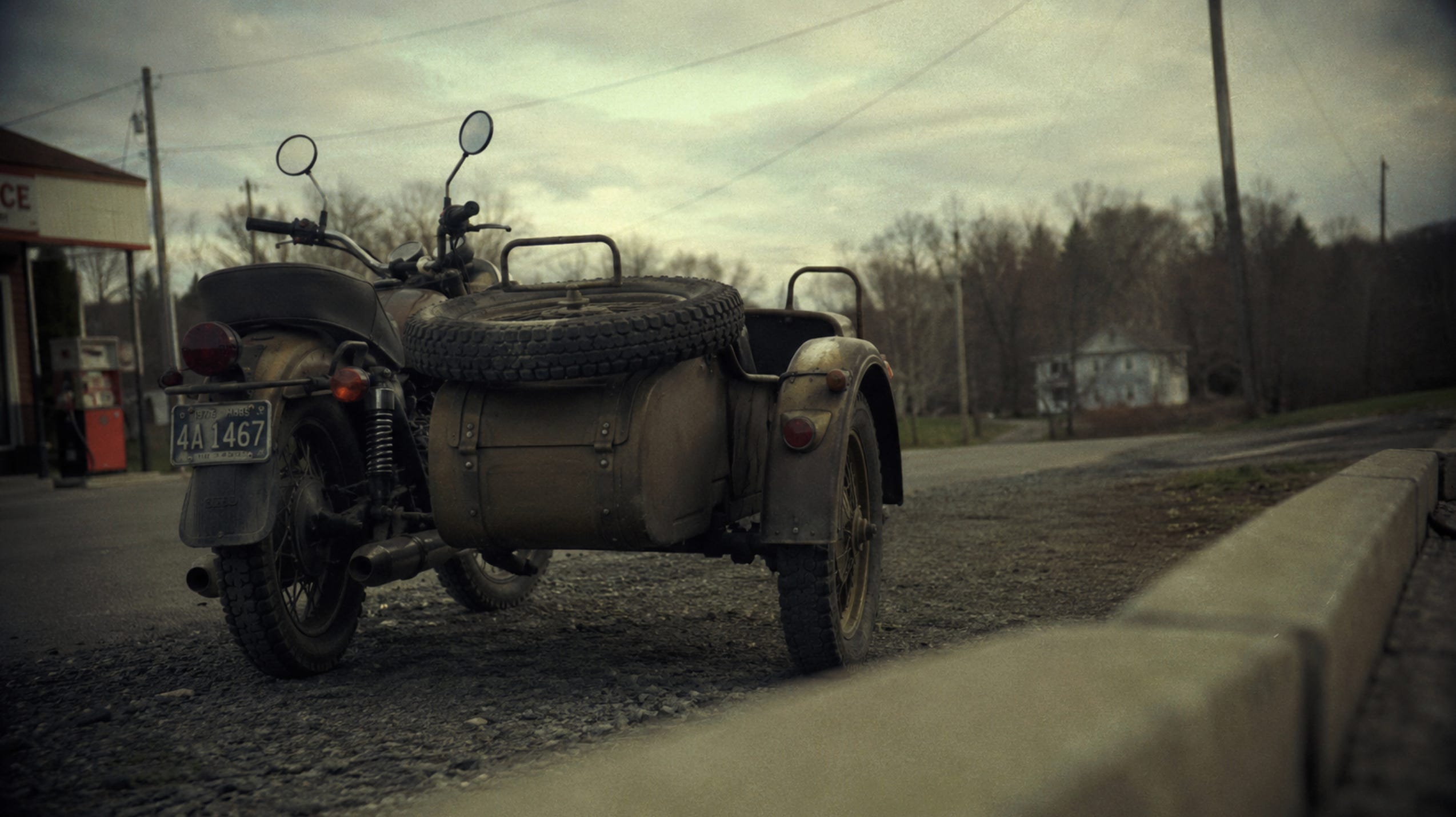
I’m hooked on vehicles that growl with old blueprints: living fossils, continuation machines, and clean-sheet throwbacks that sell old mechanical emotion under modern legal pressure. Not retro styling exercises. The actual machines, with the actual complications.
I’ve owned two of them here in the U.S. A Royal Enfield Bullet and a ‘90s Ural Gear Up 2WD. I felt the rush and the wreck on both. Ineos, Mahindra, Morgan, and Ural are all chasing gold in this space. So are the complications: safety regs, emissions laws, fuel-system headaches, labor costs, and parts that fail at the worst possible moment.
The winners in this niche are not the brands with the purest nostalgia. They are the ones with enough manufacturing scale, regulatory discipline, and parts distribution to keep old-machine emotion from turning into old-machine misery. That’s the whole article. Let’s go through them.
Ineos Grenadier
This machine stopped me cold at a show. Pure 1948 Land Rover Series I energy: the direct blueprint for what eventually became the Defender. Ladder frame, live axles, BMW B58 3.0L inline-six making 282 bhp. U.S. models are gasoline-only; diesel is available abroad. Base around $80K, equipped Trialmaster and Fieldmaster trims at $87K, and dealer-configured vehicles with accessories push past $95K. Ineos moved roughly 7,000 units globally in 2023, its first full year of deliveries. Built in France, where labor costs bite.
If this were mine, I’d explore shifting U.S.-market production to India or South America. The labor cost differential is real, and the off-road buyer demographic in both markets is growing. Ineos specifically chose the Hambach plant because it was a turnkey Mercedes-Benz facility. That manufacturing pedigree is part of what justifies the price tag. Unpicking that logic has a cost. Tariffs compound it.
The Grenadier carries a particular kind of safety debt. Not because it is dangerous. It has modern airbags and stability control, and no major testing body has reported structural failures. The real problem is repairability. A ladder-frame vehicle that takes a minor parking-lot hit costs disproportionately more to fix than a unibody crossover. That’s the cost the next tier of buyers doesn’t see until it’s too late. There is also no widely cited public crash-rating story to lean on, and that absence matters when you’re selling into a market trained to shop by stars.
On emissions, the UK diesel specs range from 276 to 340 g/km WLTP; petrol runs 325 to 370 g/km. That’s not a compliance problem for U.S. gasoline sales today, but it’s a timeline problem as fleet standards tighten globally. I love diesel engines for a vehicle in this class. This platform would benefit from a mild hybrid setup to survive the next decade of regulation.
Parts lean on BMW, which means steep pricing. U.S. dealers are thin. The Grenadier has carved a genuine niche but hasn’t broken through. With the right moves, it could own the “no-compromise, low-irony off-roader” slot that Jeep increasingly shares with lifestyle buyers. The gold is there for off-road buyers with cash. The complications are real and they go deep.
Mahindra Roxor
A different category entirely: this is an off-road-only UTV, not a street vehicle. A 1947 Willys CJ descendant built in steel with leaf springs and a 2.5L turbodiesel making around 62 hp in the standard model, 55 hp in the HD variant. Legally comparable to a farm machine or powersports vehicle, not a car. Base around $20K, loaded around $25K. Mahindra’s manufacturing base in Pune keeps the unit economics lean. Roughly 5,000 sold annually in the U.S. at the peak of the pre-lawsuit era; current post-redesign volumes are lower and Mahindra no longer reports them publicly. For an off-road-only UTV with no road credentials and retro bones, even the reduced numbers represent a workable niche.
No crash tests, airbags, or ABS required. It tops out at 55 mph. The UTV classification is what makes this business model work. Going street-legal would destroy the cost structure. Add crash compliance, emissions systems, and airbags and you’re now priced against a full Jeep.
Jeep sued over the grille design. Mahindra tweaked it post-2020 and stayed in the off-road lane. Some owners mod their Roxors anyway: lights, VIN tricks, creative titling. But that gray zone isn’t cheap and it isn’t clean.
Available through powersports dealers in farm states and off-road markets. The business is steady. The ceiling is low by design.
Royal Enfield Bullet
Mine was a 2023 model. The 1948 thumper reborn: 349cc, 20.2 hp, EFI, ABS. $4,500 here. Between ₹1.74 and ₹2.16 lakh ex-showroom in India depending on trim. Royal Enfield’s 350cc volume is enormous; the Bullet alone moves tens of thousands of units in strong months, and total monthly RE sales can exceed 80,000–100,000 across the lineup. That growl tore up backroads the way it’s supposed to.
Then came the wreck. Bolts shook loose. Wires fried. Parts were a hunt: U.S. dealers were a joke and India shipping was unreliable. ABS and emissions compliance modernized the bike, but also sanded off some of the old-machine feel. India’s BS6 emissions standard helped end the old 500cc single, and with it some of the rude mechanical punch that made the Bullet feel ancient in the best way.
Royal Enfield has the scale. The headaches follow it everywhere the scale doesn’t reach.
Morgan Plus Four
Not my era. 1950s roadsters don’t spark me personally. But this machine is stunning. Morgan’s CX aluminum platform with traditional ash body framing, BMW 2.0L turbo making 255 hp. £69,995 in the UK including VAT; $84,995 MSRP in the U.S. as a replica-classified vehicle. Hand-built in Malvern. About 850 sold per year total across the lineup.
The Morgan buyer is not shopping for transportation. They are buying ritual: the visible craft of the ash framing, the smell of a car assembled by hand in small batches, a machine that behaves like a weekend object rather than a tool. That is a real value proposition. It is also an extremely narrow one.
Morgan enters the U.S. market through a low-volume replica compliance pathway with an annual cap around 325 units. That structure is the only reason street-legal operation is viable at this scale. It is not a simple under-1,000 loophole; it’s a deliberate regulatory lane Morgan has learned to live inside. Emissions scrape Euro 6 at 165 g/km. Parts tap BMW’s supply chain. U.S. dealers are nearly nonexistent.
UK labor costs are baked into every unit. Morgan exists for wealthy collectors. That is both its ceiling and its definition. It doesn’t scale and doesn’t need to. It survives by staying rare.
Ural Gear Up 2WD
Mine was a ‘90s model: 650cc boxer twin, 35 hp, shaft drive, sidecar with a second driven wheel. Paid $3K used. New ones run about $22K before options at 749cc and 41 hp. Historically Russian-built; post-2022 production shifted to Kazakhstan following sanctions, with U.S.-based distribution continuing out of Redmond, Washington.
It broke on a schedule. Gears shredded. Clutch burned. Carbs gagged. Parts arrived in flimsy packaging and sometimes didn’t. There were no real dealers. One mechanic in my area knew these machines, and he kept mine alive until he died. After that, it never ran right again.
Safety is mostly the sidecar itself: the mass, the visibility, and the hope that everyone around you understands what they’re looking at. Fuel economy is prehistoric. The gold here is fading. Nostalgia has been priced too high for too long, and the geopolitical disruption didn’t help.
So Is There Gold?
Calling this one market would be wrong. The only thing these vehicles share is the emotional proposition: old blueprint, modern pressure, and a buyer who wants the ghost more than the convenience.
The gold is real, but nostalgia alone does not mine it. Scale does. Compliance does. Parts do. Dealer support does.
Royal Enfield survives because India gives it volume. Mahindra survives because the Roxor stays off-road. Morgan survives because it stays rare. Ineos is trying to prove that a clean-sheet throwback can become a global business. Ural may prove the opposite: that charm can’t outrun price, geopolitics, and parts pain forever.
The market is there. The buyer is there. The machine has to do more than look haunted. It has to start, pass, ship, idle, brake, and get fixed. That’s where the ghosts get expensive.
Next time: resto-mods. New guts, old skins, art over regulation. A cleaner path to the same obsession.
#automotive #offroad #retrodesign #motorcycles #industrialstrategy

Michael Entner-Gómez is a strategist, technologist, and writer focused on the convergence of the world’s most critical infrastructure sectors: energy, transportation, and telecommunications. Using a systems-thinking approach, he helps industry incumbents and disruptors future-proof their operations, scale complex platforms, and navigate the shift to software-defined everything.
This article is not sponsored, not paid, and not written to please. It’s written to inform.